


AUTHOR
Anthony Steinhoff
Université du Québec à Montréal
Anthony Steinhoff is a professor of history at the Université du Québec à Montréal. He is the author of The Gods of the City: Protestantism and Religious Culture in Strasbourg, 1870-1914 (Brill, 2008) and co-editor of The Total Work of Art: Foundations, Articulations, Inspirations (Berghahn Books, 2016).

In his 2013 book, The Nazi and Psychiatrist, the journalist Jack El-Kai explored the encounters between the most notable Nazi defendant at the Nuremberg trials (officially the proceedings of the International Military Tribunal at Nuremberg), Hermann Göring, and the American military psychologist initially charged to examine the fitness for trial of all the future defendants at Nuremberg, Douglas M. Kelley. This book later became the base for a film project directed by James Vanderbilt (with El-Kai contributing to the screenplay), which appeared in November 2025 bearing the simple title: Nuremberg. Is the change in title as the book became a movie simply a matter of marketing, an effort to appeal to a broader audience? Or does it signal instead an effort to reframe El-Kai’s story, so that the Göring-Kelley narrative serves to illuminate the history of the Nuremberg trials more broadly? If the latter, does this tack make for good history or only good cinema?
From a cinematographic perspective, Vanderbilt’s choice to position Göring (and his relation to Kelley) at the trials’ centre clearly offers certain benefits. On the one hand, in addition to being the highest-ranking Nazi on the stand, Göring’s mercurial personality, aptly embodied by Russell Crowe, generated plenty of film-worthy drama at Nuremberg, and not just the testy exchanges with the American prosecutor, Justice Robert Jackson. That Göring succeeded in taking his own life on the eve of his execution also provided a moment tailor-made for the movies. On the other hand, framing Göring’s experiences as a type of synecdoche for the trials broadly parallels how the Allied prosecutors’ themselves structured their indictments. Namely, in the absence of many key Nazi leaders, the prosecutors indicted people who could “stand in” for the missing leaders and take responsibility for the crimes of particular Nazi organizations. For instance, with Heinrich Himmler dead (by suicide), Ernst Kaltenbrunner was indicted as responsible for the crimes committed by the SS. Useful too was the fact that Göring had been indicted on all four accounts: war crimes, crimes against peace, crimes against humanity, and conspiracy to commit these three types of crime.
While the Göring-Kelley story makes for a great hook to draw viewers into the trials as historical subject, Vanderbilt’s decision to frame the entire narrative around it leads to choices that sit less well with the actual historical record. One problem is that of balance: only half of the film is devoted to the proceedings themselves. While the psychological evaluation of the eventual defendants was an essential part of the preparations, the film largely ignores the more critical task facing the Allied forces: not only gathering relevant documentary evidence but also understanding and processing it. Showering so much attention on the pre-trial period in the film, however, necessitated taking short cuts with the coverage of the proceedings, most notably by focusing on the United States’ prosecution of Göring.

Figure 1. US Army soldiers working with evidence for the Nuremburg trials
Source: Wikimedia Commons
This is a doubly unfortunate choice. On the one hand, the United States, led by Justice Jackson (played by Michael Shannon), was responsible for only the first count of the indictment, namely conspiracy. Accordingly, his focus was not on proving that Göring and other defendants committed the other crimes, only that they conspired to do so. Nuremberg neither clarifies this important detail, nor does it acknowledge the crucial contributions of the French and Soviet prosecutors, who were responsible for prosecuting counts 3 and 4 (war crimes and crimes against humanity, the British being responsible for count 2, crimes against peace). Moreover, for all the importance Jackson and the Americans attached to it, count 1 ultimately figured only as an aggravating factor in the judges’ verdicts.
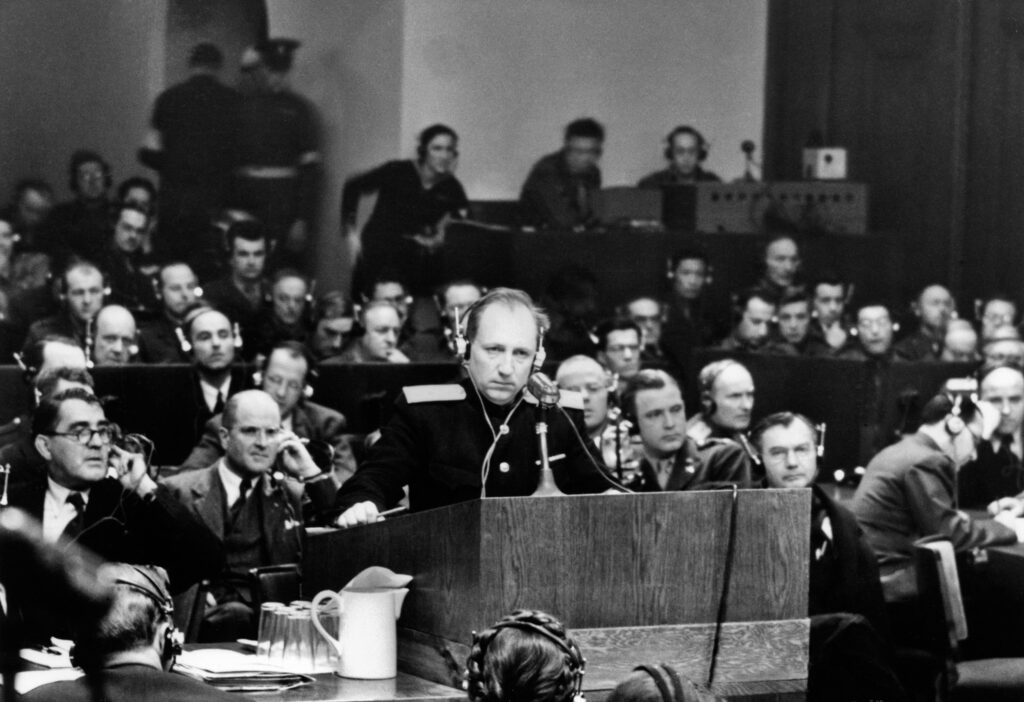
Figure 1.2. Soviet prosecutor Roman Rudenko
Source: Wikimedia Commons
On the other hand, Nuremberg’s portrayal of the United States’ prosecution of Göring creates a false sense both of his alleged crimes and the trials’ broader goals, one that reflects more present-day sensitivities rather than the political realities of 1945-1946. Certainly, an important goal of the trials lay in holding the accused Nazis accountable for the deaths of millions of men, women, and children. That Göring conspired to cause a certain number of these deaths was fairly easy for Jackson and his team to establish. As head of the German Air Force and Director of the Four-Year-Plan Office, Göring was intimately involved in Germany’s plans to commit crimes against peace (wage war). Nuremberg however emphasizes not the deaths due to bombing or combat, but rather those that occurred in the concentration camps. Without doubt, the Americans used their film on the German concentration camps (shown on November 29, 1945) to provoke moral outrage against the accused and to help educate the German public about the depth of the regime’s crimes.
But Nuremberg errs both by portraying these camps primarily as killing centers, namely for roughly six million of Europe’s Jews, and by suggesting that Nuremberg served above all to put the Nazis on trial for the Holocaust. As Crowe’s Göring correctly asserts in the film, he personally had little responsibility for the concentration camps, which were under the purview of SS Chief Himmler.
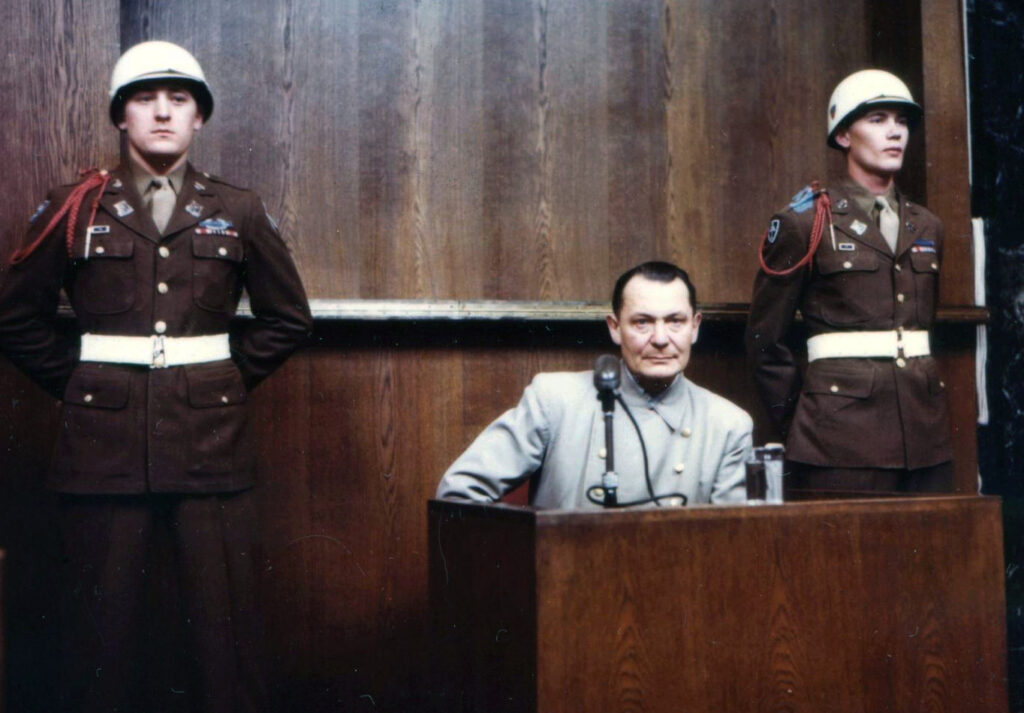
Figure 3. Hermann Göring under cross-examination
Source: Wikimedia Commons
Moreover, Jackson would have been hard pressed to depict the creation of concentration camps as part of conspiracy to kill, because while no small amount of death did occur there, none was explicitly designed for killing until the establishment of the first “death camps” in 1942 (e.g., Belzec, Sobibor, Treblinka, and Auschwitz). Especially telling, too, is the scene where Shannon’s Jackson tries to provoke Crowe’s Göring into admitting his role in the Final Solution. Whereas the film suggests that Göring was dodging the truth when he responded that this meant only the deportation of all Jews from Europe, at least until early 1941 this was indeed the German plan. As numerous historians have now established, for all the Nazi “talk” about eliminating Jews before 1941, only with the June 1941 campaign against the Soviet Union did that talk become murderous, planned action. Indeed, as Michael Marrus has ably demonstrated, the Allies’ grasp of what had happened remained remarkably spotty, with key pieces of information emerging only as the trials progressed. This explains, at least in part, why the former commandant of Auschwitz, Rudolf Höss, appeared at Nuremberg as a defense witness rather than as a co-defendant.
And yet, while the Allies did not prioritize finding justice for Europe’s Jews at Nuremberg, the documentation they gathered for the trials has proved instrumental in exposing the extent and depth of Nazi criminality towards Europe’s Jews. Furthermore, by the 1980s, scholarly engagement with this (and similar) evidence began to reshape the very lens through which we view the Nazi era, such that it is no longer 1933 (the year the Nazis seized power) but 1941-42 (the unleashing of the Final Solution) that serves as its primary focal point. Vanderbilt’s film is thus truer to current historiographical trends than to the history itself.
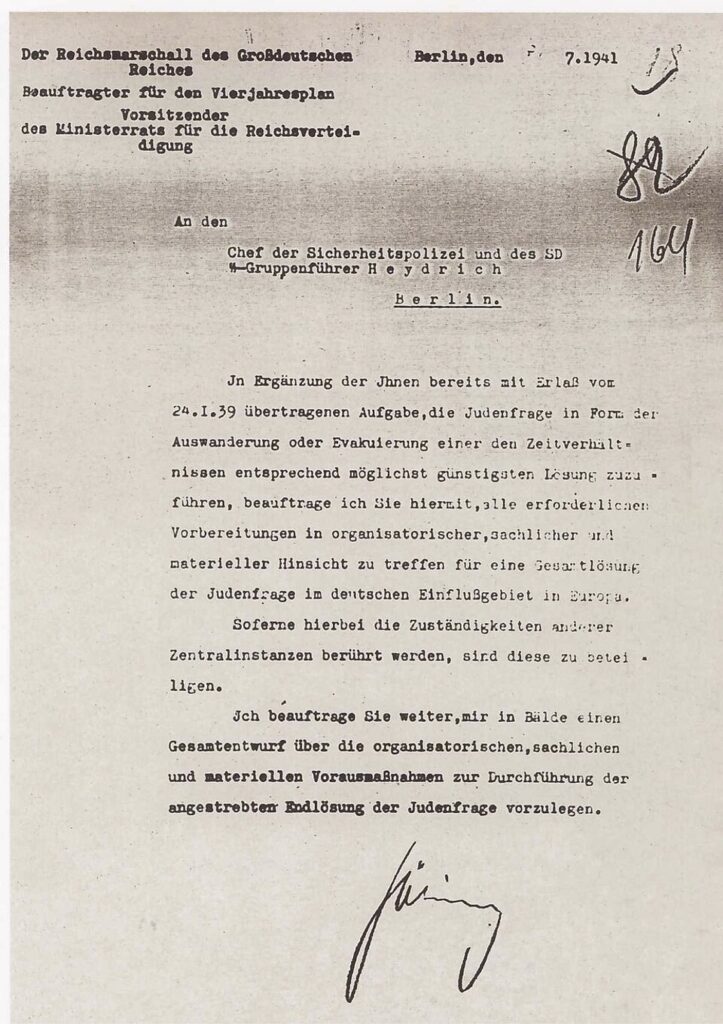
Figure 1.4. Letter from Hermann Göring to Reinhard Heydrich, as discussed in the film
Source: Wikimedia Commons
Vanderbilt’s Nuremberg succeeds on many levels, but one can’t help but wonder: was it really necessary to cast El-Kai’s story about the Göring-Kelley connection as a film about the trials more broadly? Perhaps this tack was deemed essential to selling the project to backers and, eventually, the general public. At least in this telling, however, the reframing has resulted in numerous mischaracterizations of what happened at Nuremberg and what it was about. Perhaps though it is enough if, eighty years after the trials opened, that the film directs our attention to this important event and prompts us through its very shortcomings to reflect on it and its legacy.