


AUTHOR
Annette F. Timm
University of Calgary
Annette Timm is a professor emerita of history at the University of Calgary. She is the author of The Politics of Fertility in Twentieth-Century Berlin (Cambridge University Press, 2010), co-author of Gender, Sex and the Shaping of Modern Europe: A History from the French Revolution to the Present Day (third edition, 2022). She is currently working on a book titled Lebensborn: Myth, Memory and the Sexualization of the Nazi Past.

The only way that I can enjoy an historical film that I know from the outset cannot possibly do justice (no pun intended) to its subject matter is to search for and assess the filmmaker’s thesis. While no professional historian can avoid the temptation of playing “spot the historical error,” the more compelling and pertinent enterprise is to recognize that historical films are almost always (leaving Quentin Tarantino aside) expository vehicles rather than minutely accurate representations of the past. Even more obviously than scholarly works, filmic representations of history seek to persuade a present-day audience that a particular story of the past is relevant to their lives today. Before we get caught up in the details of how writer/director James Vanderbilt summarized the crimes of a six-year war and a ten-month trial in his film, we need to ask what his purpose was. What does Nuremberg argue?
I’ll start with the positive. The plot of Nuremberg centres on the psychiatrist Douglas Kelley’s careful assessment of Göring’s power-hungry, calculating and narcissistic character and comes to the slow but ultimately correct realization that focussing on evil tells us very little about how the crimes of the Nazis were possible. Rather than repeating Hannah Arendt’s claim about the banality of evil, the film ultimately argues that it is evil’s ubiquity that makes it unsuitable as a focus for historical explanation.
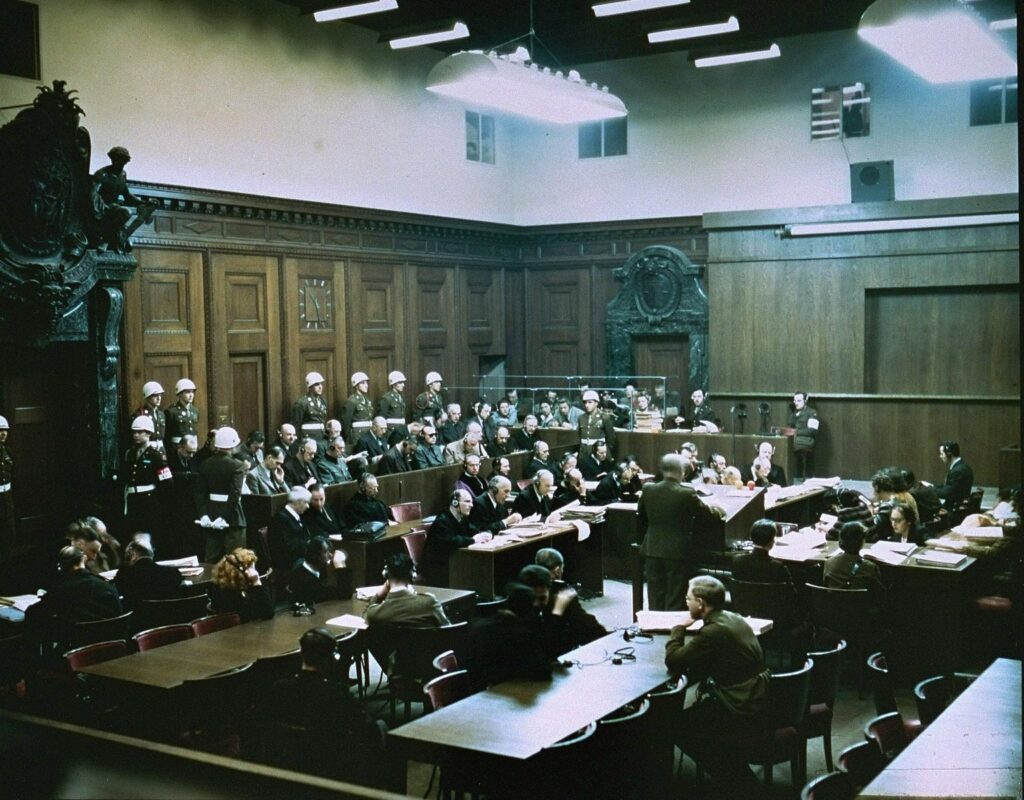
Figure 1. The Courtroom in Nuremberg
Source: Wikimedia Commons
While there is much to criticize in this film, I did appreciate that it directly counters simplistic arguments about how Germans were brainwashed into evil acts. Like many of my students, Kelley first confronts Nazi crimes with a naive faith in morality. Soon after he meets Göring, he excitedly tells his translator, Howie Triest, that “If we could psychologically define evil, we could make sure something like this never happens again.” By the end of the film, Kelley’s own ambitions have collapsed in a drunken haze, and his book about his experiences at Nuremberg has failed to convince Americans that they too are capable of the kind of evil put on trial in Nuremberg. In contrast to Justice Jackson’s belief “in our capacity to save ourselves from men like the Nazis” (voiced to the pope, no less), In the film, Kelley’s quest ends in disillusion. In real life it ended in suicide in 1958.
The juxtaposition of the two characters is a none too subtle warning to the present, punctuated by the words of the famous English theorist of history R. G. Collingwood, which roll onto the screen before the closing credits: “The only clue to what man can do is what man has done.” So far so good.
I accept the utility and timeliness of Vanderbilt’s argument. But how does he construct it? This is where things get problematic and inaccurate. In the interests of approaching the film with unbiased eyes, I tried to avoid reading about the director’s own description of his method or goals, since I wanted to approach this commentary without bias. But in searching for a few details, I stumbled upon the fact that Vanderbilt first found the story of Douglas Kelley’s intense relationship with Göring and only later discovered the fascinating back story of Kelley’s translator. Although zeroing in on Göring was a reasonable way of turning the morass of historical information into a comprehensible and compelling narrative, only the director’s over-reliance on Kelley’s own book, 22 Cells in Nuremberg, which completely fails to mention Triest’s indispensable role, seems to explain why the film would focus on Kelley rather than on Triest.
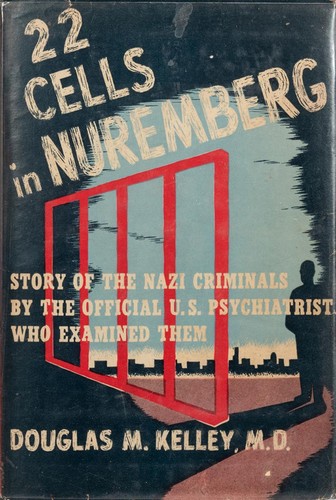
Figure 2. Cover of 22 Cells in Nuremberg
Source: Open Library
Triest’s story is much more compelling than Kelley’s. He had escaped from Nazi Germany as a teenager, and he carefully hid his Jewish identity from the Nuremberg prisoners, including a witness responsible for his parents’ death: Rudolf Höss, the commandant of Auschwitz. Höss took the stand on 15 April 1946, less than a month after Göring’s nine days of questioning in March, and his detailed testimony about how Jews were murdered with Zyklon B gas in Auschwitz made it clear that he should have been included in the first trial as a “major” war criminal. A juxtaposition of Triest’s presence in Höss’s cell and this testimony would have been a far more dramatic way of underlining the film’s thesis than Vanderbilt’s quite artificially staged courtroom scene about what we now know – but Jackson could not have known – was Göring’s order to convene the Wannsee conference to organize the Final Solution.
Rather than telling the compelling story of Triest and Höss, Vanderbilt succumbed to the temptation of creating a classic Hollywood-style trial scene, which in this case meant acting as if there was one “gotcha” moment in a trial consisting of 216 court sessions. I found that scene unconvincing as filmic drama. Even in a movie, it is not plausible that a prosecutor of Jackson’s prominence and skill would fail to carefully read a one-paragraph piece of evidence. The actual trial record underlines the point.
When Göring’s decree of 31 July 1941 ordering Himmler and Heydrich to bring about “a complete solution of the Jewish question” was read into the court record on day 86 of the trial, there was certainly – as the film depicts – a correction of the translation. But this was by no means a turning point; it was just one of many such scuffles over translation in Göring’s approximately 21 hours of testimony.
The real Jackson may not yet have realized how significant later historians would find this document, but neither did he stumble in any legal sense. And despite Vanderbilt’s proclamation to USA Today, Maxwell Fyfe did not come “riding in” to save the day at that precise moment. He only took over the questioning after Jackson and Göring’s lengthy back and forth about Kristallnacht and Aryanization (almost 9000 words of the trial record), looted art (3200 words), captured airmen (955 words) and various military attacks (3500 words). Maxwell Fyfe then made no reference to Göring’s order, instead conducting questioning that added 3100 words to the trial record about the treatment of escaped British airmen. Only a day later – the 87th day of the trial – did he come to the issue of 4 million Jews having been killed in concentration camps, and his brief – if pointed and eloquent – words on this subject bookended much longer discussions of forced labour and political and military matters.
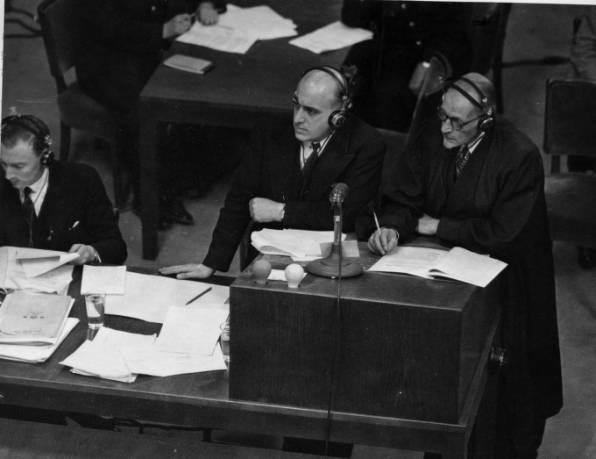
Figure 3. British Prosecutor Maxwell Fyfe
Source: Wikimedia Commons
Depicting the dispute about the translation of the July 1941 document as a turning point of the trial not only obscures how inadequately the tribunal addressed what only later became known as the Holocaust; it is a baffling choice given the film’s thesis, which relies on the slow unfolding of human understanding and the construction of interpersonal relationships. It isn’t just a historical error, it is a dramaturgical inconsistency. Granted that even in real life, Maxwell Fyfe’s language in confronting Göring with the crimes committed against Jews was considerably more forceful than Jackson’s, I still cannot understand the urge to depict Jackson as faltering and the Englishman as having saved the day – on only one day of a ten-month trial. The film does veer back to interpersonal drama. Triest reveals his Jewish heritage to Kelley in a train station as Kelley is about to leave. But in reality, the psychiatrists at Nuremberg (one of whom, Leon Goldensohn, was himself Jewish) recruited Triest precisely because of his background. Even if Triest’s big reveal scene works better as filmic drama than Jackson’s translation error, it wasn’t much more believable.
Although I have clearly failed in my quest to resist the spot-historical-errors game, I would argue that despite realizing that he needed Triest to make the point about Nazi crimes having been committed by “normal” people, Vanderbilt remained too enthralled by the spectacle of the dramatic court scene (and perhaps too convinced of Russell Crowe’s admittedly powerful depiction of Göring) to see that his message would have been better conveyed through the eyes of the victim rather than the pontification of a perpetrator. Highlighting Triest’s story would have been a much more convincing way of demonstrating the explanatory and moral pitfalls of our obsession with the historical crimes of a few big evil men.