


Eric Story is a SSHRC postdoctoral fellow in the Department of History at Western University and Historian-in-Residence at the Schulich School of Medicine & Dentistry. He has published on the legacies of war and trauma in the twentieth century. You can read his article in the Journal of the Canadian Historical Association, vol. 36, no. 1 (2026) by clicking here.

Could you discuss what you call the tension embodied within the veteran as both emblematic of wartime heroics and an object to be pitied?
What is ultimately happening to these disabled veterans is they are caught between the dominant pre-war view of disability, which is sad, pitiable and societally unproductive, and the emerging post-war view of veteranhood. This emergent understanding of being a Canadian veteran is associated with heroism, nationalism and leadership. In other words, these veterans embody what Canada’s future potential holds. While rehabilitating, working or creating a family, disabled veterans are constantly caught between these two opposing views of what a disabled veteran should be.
Were civilian disabled bodies viewed differently than disabled veterans?
Yes, they very much were. Disabled people at the turn of the twentieth century were viewed, in the words of one American historian, as “unproductive citizens.” Disabled bodies were different than able bodies and the desire for ‘interchangeable’ labour in the burgeoning industrial workplace meant that disabled people were seen as liabilities and, thus, less desirable workers. Veterans were subject to these same forces after the war, but they were able to wield the power of being military heroes who served Canada and the larger British Empire to challenge some of the ableist assumptions baked into these ideas of disabled bodies.
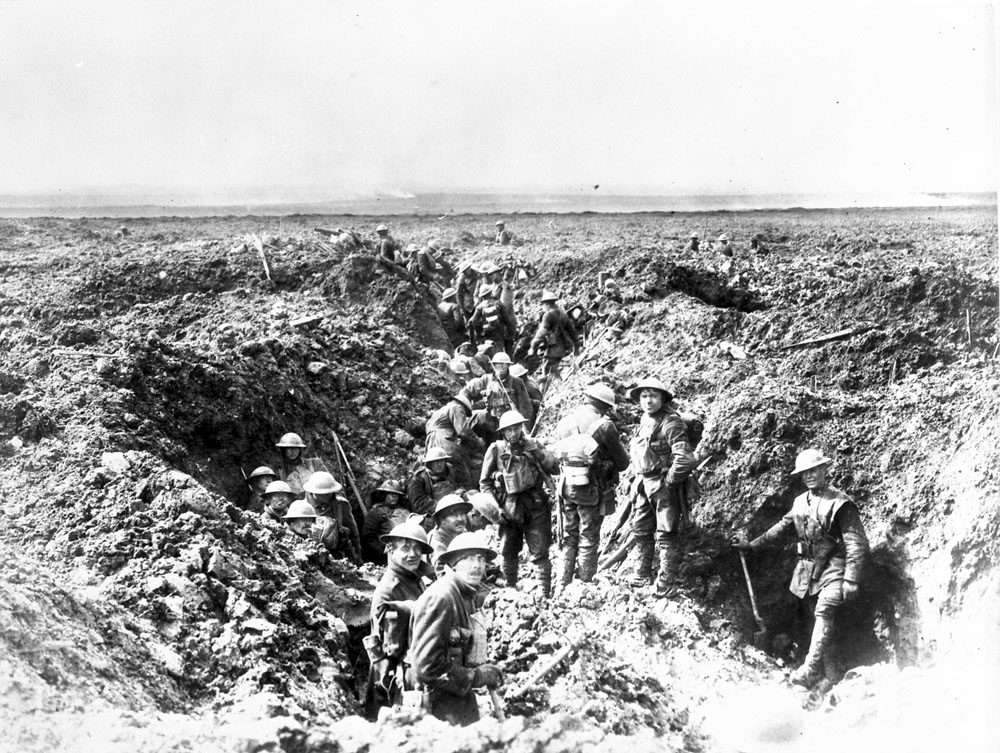
Figure 1: Canadian infantry at Vimy Ridge.
Source: “Canadian infantry consolidate their positions at Vimy Ridge,” Wikimedia Commons.

You also mentioned the War Pensioners’ Association and the Sir Arthur Pearson Association. Were their functions similar to the two advocacy groups you investigated?
That’s a good question. We don’t know all that much about the War Pensioners’ Association, though it was technically the first disability advocacy group in Canadian history. It worked on behalf of a coalition of disabled veterans. Serge Durflinger has written an entire book on the war blind in Canadian history, much of which is devoted to the advocacy work of the Sir Arthur Pearson Association (SAPA). Because there were relatively few war blind veterans, SAPA did not have as much power as some of the larger groups like the War Amputations Association or the Tuberculous Veterans Association. But like those two groups, SAPA’s leadership attempted to reduce the stigma blind veterans and civilians faced in Canadian society.
Your paper not only engaged with ideas of gender, but also noted how class informed the process of rehabilitation. Could you expand more on how working-class veterans had their opportunities limited?
Class is essential to understanding the history of disabled veterans of the Great War. Working-class veterans, especially those in occupations that required physical labour, tended to struggle financially much more in the post-war period than disabled veterans of the middle class. Physical labour is such an important part of working-class life, and if a wound or illness keeps you from performing exertive labour, your wages will inevitably suffer. Add to that the ableist forces that devalue disabled people’s contributions to society, and many disabled working-class veterans’ families struggled to survive in the post-war era.
Have you read anything good recently?
I really can’t recommend enough The Mind Mappers (2025) by Eric Andrew-Gee. It follows the tragic partnership of Wilder Penfield and William Cone, who founded the Montreal Neurological Institute and were early pioneers in neurosurgery.