


AUTHOR
Dr. Wendell Nii Laryea Adjetey
McGill University
Wendell Nii Laryea Adjetey (Nii Laryea Osabu I, Atrékor Wé Nòyaa Mantsè) is a Dorothy Killam Fellow and William Dawson Associate Professor of post-Reconstruction U.S. and African Diaspora history at McGill University. His book, Cross-Border Cosmopolitans: The Making of a Pan-African North America (UNC Press, 2023), is the first monograph to earn concomitant commendations in the fields of U.S., African American, African and African Diaspora, and Canadian history, including The Governor General’s History Award for Scholarly Research.

The 2025 horror flick, Sinners, highlights and exploits multiple tropes in African American, U.S., and African Diaspora history. A film about vampires, Sinners encapsulates the appropriation of blackness or the veritable culture vultures who feasted—metaphorically and literally—on the flesh, output, and lifeways of African peoples since the genocidal enterprise called transatlantic slavery commenced. Set in 1932 Clarksdale, Mississippi, the film revolves around First World War veterans, twin brothers Elijah “Smoke” and Elias “Stack” Moore, smooth-talking, zoot-suit wearing, M1911-packing hustlers who returned home to launch an after-hours juke joint during Prohibition.
This review examines three broad historical themes in Sinners: African Americans and Great War military service; sexuality and gender; and the latent, spiritual dimensions of slavery and Jim Crow.
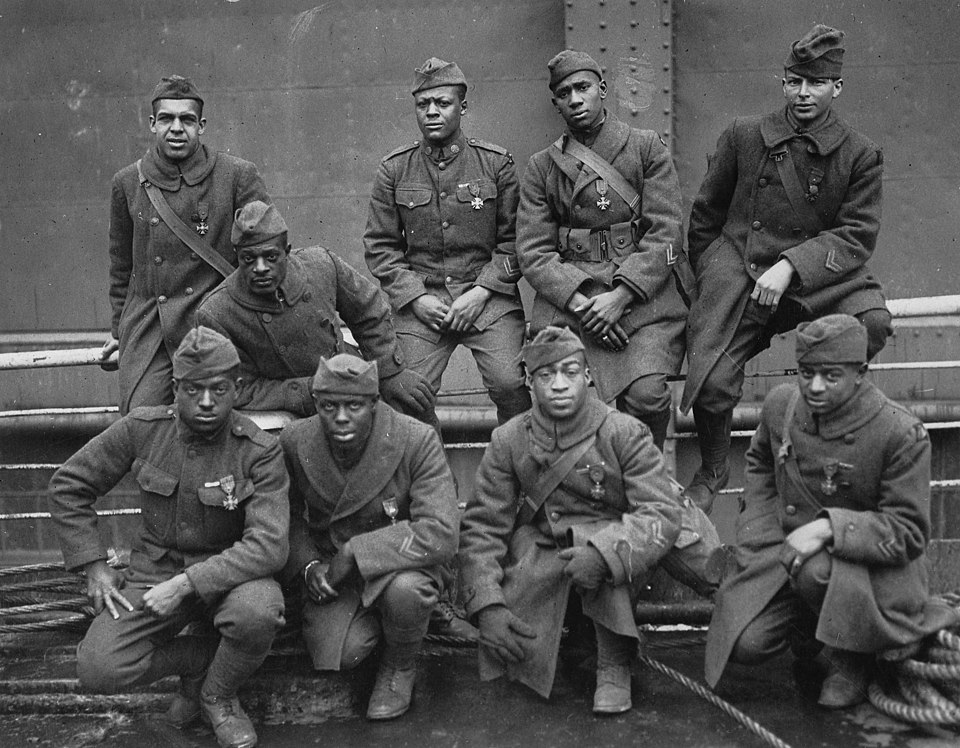
Figure 1. Soldiers of the 369th (Harlem Hellfighters).
Source: Wikimedia Commons
Despite ruling class reticence to muster Black soldiers for what it considered a “white man’s war,” over 200,000 African Americans served in World War I. Since slavery, white people feared Black people having access to and proficiency in firearms, and wars provided opportunity for Black men to hone coveted military skills. For Black men like the Moore twins, the Great War allowed them to pursue “manhood,” that is, a gendered racial dignity pivotal to citizenship that Jim Crow-era laws and practices denied them. Participation, reasoned Black men, equipped them with skills and a disposition to protect their communities. For that generation in the United States and throughout the African World, fighting in the Great War produced thousands of battle-hardened citizens whom, they asserted, could “combat the outrages” of white supremacy.
Black notions of “manhood” were not, however, tantamount to “patriarchy.” For the enslaved and their descendants who occupy the most exploited and disempowered class in the United States, they never wielded any structural, let alone, hegemonic influence akin to the elite white men and women who shaped actual patriarchal mores. Because patriarchy is first and foremost a system of control, domination, and exploitation that seeks to remove out-group males (quintessentially Black men and boys) from civil society, thereby preventing their procreation or “fraternizing” with women and girls of the in-group (white females), the self-assertion of the Moore twins and their resolute commitment to Black people challenged patriarchy and white domination.
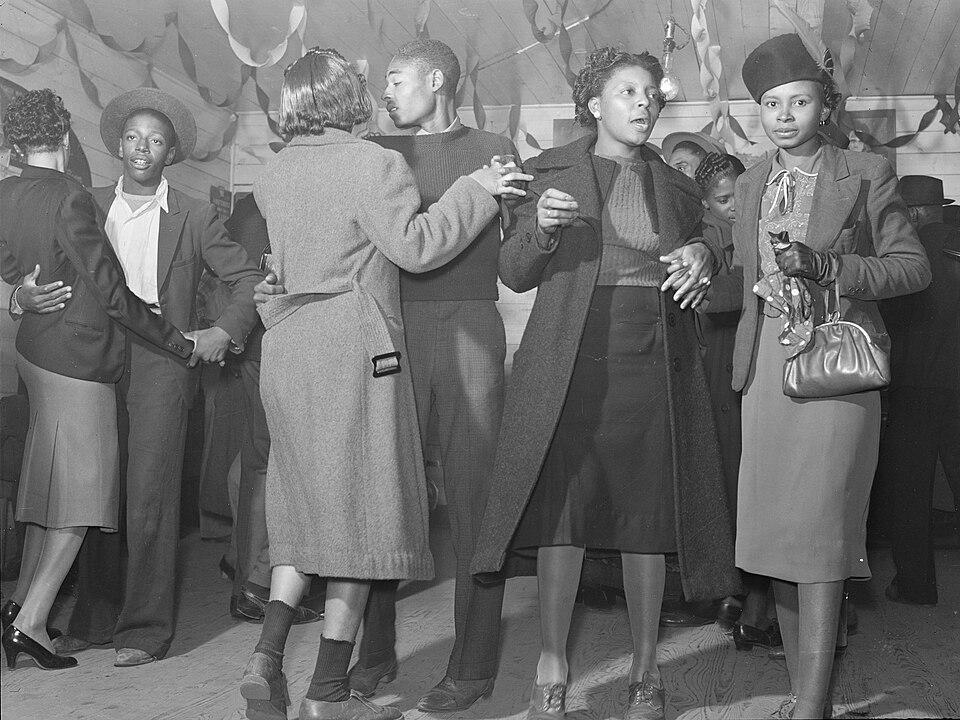
Figure 2. Dancing at a Juke Joint in Clarksdale, Mississippi, 1939.
Source: Wikimedia Commons
The race consciousness, bravado, gangsterism, and sexual prowess that Smoke and Stack exude are partly a corollary of their status as Black war veterans. Their confrontation with Mississippi Klansmen is an allusion to the ways that Black veterans returned home unwilling to kowtow to white power. Many fought, in fact, in iconic race wars from Washington, D.C., to Chicago (a city in which the twins lived and hustled for European gangsters) during the 1919 Red Summer. The Moore brothers practiced a martial notion of honour and what it meant to protect community and Black economic interests. That Stack’s paramour was white-passing, despite his own uneasiness, underscores his veteran status, because sexual liaisons between African-American soldiers and French women, for example, occurred with some frequency overseas. The brothers’ confidence—cockiness, even—is an accurate depiction of the self-assured “bad nigga” who had no qualms harming white men who violated codes of racial and masculine propriety. The characters of Smoke and Stack are likely a reference to the Jones brothers (i.e., Ed, George, and McKissack), Mississippi-born, Great Migration African Americans who arrived in Chicago around World War I. As Black mobsters or “policy” kings who ran the underground lottery racket, they went toe to toe with European mobsters in interwar Chicago.
The gendering of Black women in this film is also salient, not to mention problematic. Annie, Smoke’s lover, is a proud, richly-melanated heroine, who, despite her exquisite performance, conveys an undertone of the Mammy. Her attire, for example, accentuates a buxom Mammy caricature, not to mention that in several instances her character signals caregiver and domesticity in interactions with Smoke and others. Another woman, Pearline, is a married, soft-spoken adulteress. Pearline’s character, put differently, invokes the “Jezebel” archetype from slavery, which demeaned Black females as lascivious and impervious to sexual violence.
The other striking theme in Sinners is spiritual warfare, a “hidden transcript” of sorts, that shaped relations between enslaved and enslaver and later Black folk and white neighbours. Annie portrays the African priestess and healer flawlessly. Her knowledge of the supernatural and African notions of eternal damnation is encapsulated in this comment: “Vampires is [sic] different. Maybe the worst kind. The soul gets stuck in the body. Can’t rejoin the ancestors. Cursed to live here with all this hate.” Annie protects and heals kin. “How’d you know I didn’t pray and work every root my grandmama taught me,” she informs Smoke in an intense dialogue, “to keep you and that crazy brother of yours safe every day since you’ve been gone”? Discreetly adorning Smoke’s neck is an amulet—the West African gris-gris—that Annie made. So iconic and potent are these talismans that the famed African emancipator, Harriet Tubman, wore various apotropaic objects when travelling behind enemy lines. Lost to some observers of transatlantic slavery is this formidable dimension that enslaved persons and descendants believed influenced outcomes in asymmetric warfare in their favour.
In sum, Sinners is a work of cinematic art. Its allusions to historical themes in the United States and African Diaspora increase relevance to scholars and lay viewers. Specifically, sophisticated references to the Great War and notions of citizenship, gender, and African spirituality illustrate a modicum of thoughtfulness in how the world of cinematic fiction can inspire interest in transnational Black history.
Further reading
- Yvonne P. Chireau, Black Magic: Religion and the African American Conjuring Tradition (Berkeley: University of California Press, 2006).
- Reena N. Goldthree, Democracy’s Foot Soldiers: World War I and the Politics of Empire in the Greater Caribbean (Princeton: Princeton University Press, 2025).
- Françoise Hamlin, Crossroads at Clarksdale: The Black Freedom Struggle in the Mississippi Delta (Chapel Hill: University of North Carolina Press, 2012).
- Adriane Lentz-Smith, Freedom Struggles: African Americans and World War I (Cambridge, M.A.: Harvard University Press, 2009).
- Vincent Woodard, The Delectable Negro: Human Consumption and Homoeroticism within U.S. Slave Culture (New York: New York University Press, 2014).